

8/19/26: Sean Taylor, The Bay Foundation "Saving the Forgotten Forests: Palos Verdes Kelp Forest Restoration"
The Bay Foundation’s (TBF) Palos Verdes Kelp Forest Restoration Project works to reestablish kelp forests that have been lost due to local stressors. Healthy kelp forests provide numerous benefits and ecosystem services to coastal populations including protection against coastal erosion, storm energy absorption, supporting local commercial and recreational fisheries, and ecotourism. Kelp forest communities also contribute to significant carbon sequestration, ameliorating the impacts of excess atmospheric CO2. Kelp canopy coverage off the Palos Verdes Peninsula has decreased by approximately 80% over the past 100 years.
The combined effects of overfishing, pollution, and increasing frequency of warm water events can lead to the destructive grazing of kelp by sea urchins and the formation of “urchin barrens” that can last decades. Subtidal observations based upon mapping efforts conducted in 2010 identified large expanses of nearshore rocky reefs that were dominated by high densities of purple and red sea urchins. In total, 152 acres were described to exist in an urchin barren state. All benefits and ecosystem services associated with kelp forests are lost in the urchin barren state.
TBF’s project goal is to reduce sea urchin grazing pressure to restore the giant kelp forest ecosystem. Once the kelp and algae are restored, fish, invertebrates, marine mammals, and birds return to the area. TBF’s techniques were honed over ten years of development from 2000 to 2010. Since 2013, TBF has implemented their methodology on over 80 acres. The project has produced lasting results benefitting wildlife and involving an expanding community of divers, freedivers, and ocean enthusiasts.

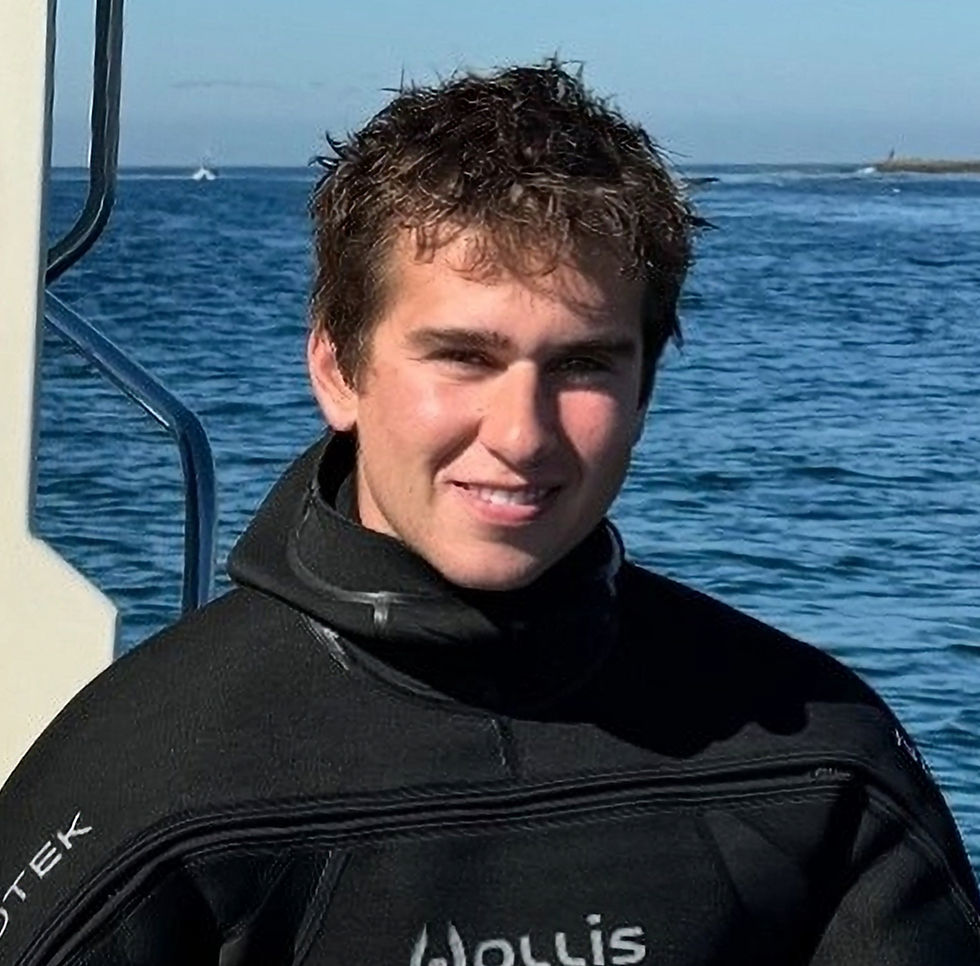
Speaker Bio: Sean is a Program Manager for the Ocean Resilience Program at The Bay Foundation (TBF), where he has worked since 2022. As a Program Manager, he leads dive teams for subtidal scientific diving projects that focus on Macrocystis pyrifera (giant kelp) restoration, endangered and threatened Haliotis species (abalone) recovery, and Zostera species (eelgrass) transplants. Sean also created and manages a volunteer scientific diver program at TBF that currently has over 50 active volunteer divers. He received his B.S. in Environmental Studies with a minor in Marine Biology from USC and is currently working on a M.S. in Biology at Cal Poly Pomona.


Comments